Two independent 2026 surveys, different populations and different methods, landed on the same figure: roughly 21% of finance organizations can point to measurable value from AI. Budgets are climbing anyway.

Key Takeaways
Finance has rarely had an easier time getting an AI budget approved, and rarely a harder time proving what the money bought. A survey of roughly 300 finance and accounting professionals published on September 16 found that 66.5% of organizations are increasing AI investment, 24.2% now treat it as a top budget priority, and a vanishing 0.7% are cutting spend. The same dataset found that only 21.0% report meaningful, measurable results, while 64.8% describe their outcomes as mixed or outright unsuccessful. Enthusiasm is not the constraint. Evidence is.
The figure would be easy to dismiss as one vendor's framing if a very different study had not produced the same result. Deloitte's CFO Signals survey polled 200 finance chiefs at North American companies with at least $1 billion in annual revenue between November 14 and December 7, 2025. Among that group, 87% expect AI to be extremely or very important to finance operations in 2026, only 2% say it will not matter, and 54% name integrating AI agents as their single biggest transformation priority, ahead of the 52% who picked strengthening data quality, access and usability.
Then comes the other half of the same survey. As CFO Dive reported, 63% of those CFOs say they have fully deployed AI solutions, but only 21% believe those investments have delivered tangible value, and just 14% have fully integrated AI agents into the finance function. Two studies with different populations, different sponsors and different question sets arrived at 21%. Billion-dollar CFOs and mid-market controllers are describing the same shortfall.
"The willingness to fund AI is clear. What is still missing is consistent proof that it can carry real finance work from start to finish." – Rohit Gupta, CEO and co-founder, Auditoria.AI
The uncomfortable part is that AI is clearly working somewhere. Consero's 2026 CFO survey of 102 private equity and venture-backed finance leaders, fielded with Cascade Insights in the first quarter, found 97% now using or testing AI in finance, up from 74% in 2024. Fully embedded AI nearly doubled in a year, from 22% to 42%. Most tellingly, 65% of those teams now close the month in under 10 days, against 8% two years earlier.
That is a real operational gain, and it is concentrated in work finance controls by itself. Reconciliation, variance commentary, document extraction and first-draft reporting all compress well because nobody outside the department has to cooperate. The cash cycle is different, and it has barely moved. In the September survey, 44.5% of teams still spend 11 or more hours a week on follow-up and 13.4% spend 30 hours or more. Only 16.1% answer shared inbox requests in under two hours, and 43.8% manage it within 24. Asked to name their single biggest daily pain, 22.1% pointed at inaccurate vendor and customer information and 21.7% at shared inbox volume.
The pattern is consistent enough to be a planning assumption: AI is compressing the tasks a finance team can finish alone and leaving untouched the ones that end with waiting for someone else to reply. A faster close does not collect a receivable, and a model that drafts a dunning note does not resolve the dispute underneath it.
Respondents were fairly precise about what stops the work. Integration leads at 36.7%, followed by high initial investment cost at 36.3%, security and privacy concerns at 34.5%, and difficulty finding suitable tools at 33.8%. Where results fell short, 29.2% said the technology simply underperformed. The data story is corroborated from the CFO seat: 52% of Deloitte's respondents ranked data quality, access and usability a transformation priority, and 33% of Consero's finance leaders named data readiness the number one blocker to AI ROI.
The quieter constraint is authority. Only 2.5% of finance organizations describe their operations as fully autonomous, 13.5% as governed autonomy and 26.3% as supervised. A third, 33.1%, still require a person to approve every AI action, and 48.8% keep execution entirely in human hands against 39.9% who let AI execute work. The average team now runs AI in 2.43 functions, a 36% increase year over year, so the footprint is widening even where the leash stays short.
None of that is irrational. Finance is the control function, and 75.4% of respondents said they are confident their reporting is accurate, a position nobody wants to trade for speed. But an agent that cannot act without a human clicking approve is an expensive autocomplete, and that is a plausible explanation for the 21%. The organizations seeing returns are not the ones that bought more; they are the ones that decided, function by function, what an agent is allowed to finish on its own.
"Finance does not need autonomy for autonomy's sake. The goal is to give AI exactly the authority it needs to get the work done, with the policies, permissions, controls, and accountability finance already expects." – Rohit Gupta, Auditoria.AI

Guide
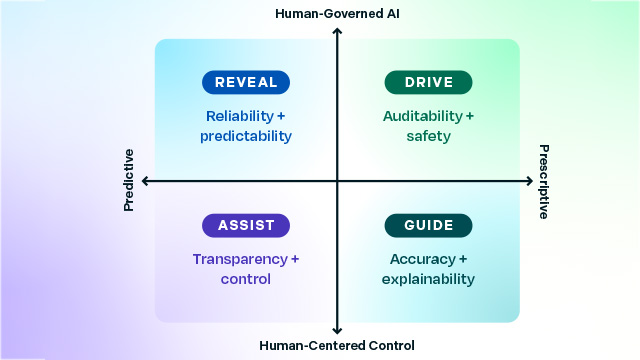
A third of finance teams still require a human to approve every AI action, which is hard to change while nobody can say precisely what an agent does. This plain-language explainer covers agentic AI in AR workflows, credit decisions and cash application.
Download

Guide
Integration is the leading barrier to AI value at 36.7%, which is exactly the step a pilot skips. This guide sequences adoption from use case selection through integration, governance and change management.
Download

Guide
With 36.3% of teams citing initial investment cost as a barrier and only 21% able to show tangible value, the business case is the hard part. This guide covers where CFOs are starting and how they are justifying the spend.
Download
Top-quartile companies generate 23% more free cash flow, and the gap is almost always working capital.

A survey of 600 finance executives finds AI is reshaping capital allocation at a pace most organisations were unprepared for.

Global deal value hits $1.2 trillion in Q1 2026 as falling rates close the valuation gap between buyers and sellers.
