The Federal Reserve's first rate increase since 2023 pushed its 2027 rate path up half a point, landing just as finance teams lock next year's budgets. Plans built on June's assumptions are now pricing the wrong cost of money.

Key Takeaways
Most corporate budget calendars put the heavy lifting in September and October: revenue targets agreed, headcount plans drafted, capital requests ranked. This year the single most important input to all of it moved in the middle of the process. On September 16, the Federal Reserve raised rates for the first time since 2023, and it signaled that it probably is not done. For finance teams that built their 2027 assumptions on the rate path the Fed itself published in June, the plan on the table is already out of date.
The Federal Open Market Committee voted 12-0 to lift the federal funds target range by a quarter point to 3.75% to 4%. The statement was blunt about why: "Inflation remains elevated," and the increase is meant to "support a timelier return to the Committee's 2 percent goal." It also described economic activity as expanding at a solid pace, which removes the usual reason to expect a quick reversal. This is not an emergency hike into a weakening economy. It is a policy correction into a strong one.
The more consequential number for planners is in the Fed's updated Summary of Economic Projections. In June, the median official expected the federal funds rate to end 2027 at 3.6%. The September median is 4.1%, a half-point increase in a single quarter. The 2028 median rose by the same margin, from 3.4% to 3.9%. For this year, 12 of 18 participants now place the year-end rate at 4.125% and four place it at 4.375%, meaning 16 of 18 expect at least one more increase before December. Median PCE inflation for 2026 was revised up to 3.7%, with core PCE at 3.4%.
Longer-term borrowing costs have moved with it. The 10-year Treasury yield reached 5.04% during the week of the Fed meeting, its highest level in nearly two decades, according to analysis from the University of Virginia's Darden School of Business. On the short end, the prime rate that prices most business lines of credit stepped up from 6.75% to 7% at major U.S. banks, according to a PYMNTS analysis of the hike.
"Monetary policy must restore confidence that inflation will return durably to the Federal Reserve's target." – Rodney Sullivan, Executive Director, Richard A. Mayo Center for Asset Management, Darden School of Business
The contrast with where the consensus sat this summer is stark. When this publication looked at the Fed's likely path in August, futures markets were pricing three cuts over 18 months. Any 2027 plan that carried that assumption forward, in its interest expense line, its hurdle rates or its customer demand model, is now built on a rate environment that no longer exists on the Fed's own projections.
The timing of this quarter's CFO Survey from the Richmond Fed, Atlanta Fed and Duke University's Fuqua School of Business makes its findings more telling, not less. It was fielded from August 17 to September 4, closing almost two weeks before the rate decision, and drew responses from more than 500 firms. Even without the hike in hand, finance chiefs were revising their inflation assumptions sharply upward. Respondents expect to raise their own prices by an average of 5.3% this year and 4.5% in 2027. At the start of the year, both figures stood at 3.6%.
Cost expectations point the same way. CFOs expect unit costs to climb 4.8% and average wages 4.3% this year, against mean revenue growth of 7.7%. That is still a positive spread, and headline optimism held up: CFOs rated their own company's prospects at 69.7 on a 100-point scale. But the survey's detail shows where rising rates bite first. According to Reuters coverage of the results, roughly 20% of firms named monetary policy as a top concern, up from under 15% in the prior survey. Among firms that do not plan to invest, 42% cited unfavorable financing or a need to preserve cash, up from 32% six months earlier, and about one in five small firms said financing constraints were holding back expansion or making it hard to cover costs.
"Where there are challenges they are most pronounced for small and financially constrained firms." – Sonya Waddell, Economist, Federal Reserve Bank of Richmond
Firms overall also anticipate less capital investment over the next six months than they did six months ago. Put together, the survey describes a finance function that was tightening its assumptions on prices and capital spending before the Fed confirmed the direction of travel. The budgets that have not caught up are the ones built earlier in the summer and not yet reopened.
A 25 basis point move sounds small until it compounds through a planning model. The first-order effect is interest expense on floating-rate debt, which reprices within a billing cycle. The second-order effects are larger and slower: a higher discount rate trims the value of every long-dated capital project in the queue, customers who finance their own purchases stretch payment terms, and the opportunity cost of idle cash rises. As the same PYMNTS analysis put it, a 50 basis point yield gap on $1 billion in operating liquidity is worth $5 million a year, and a full point is worth $10 million.
That puts forecasting capability, not just the forecast itself, at the center of the problem. PYMNTS Intelligence research found that 62% of middle-market finance executives have struggled to manage or scale cash flow forecasting, and 37% called it their single biggest finance or back-office challenge. The same body of research found that 91% of CFOs said only a small or moderate decline in certainty could push their companies into a defensive posture. A rate path that moved half a point in one quarter is exactly that kind of decline.
The practical risk is not that a 2027 budget carries the wrong rate. It is that the budget was built as a single-point plan, so there is no fast way to see what the wrong rate does to hiring, capital spending and cash. Teams running driver-based models with rates, prices and payment timing as explicit inputs can re-cut the plan in days. Teams whose assumptions are buried in spreadsheet tabs will spend the rest of budget season finding them.


Guide
Headcount is the line a rate shock hits hardest and reverses slowest. This guide sets out how finance, HR and business leaders build a shared workforce plan that can be re-staged when the rate case changes.
Download

Guide
With the prime rate at 7%, every day of receivables costs more to carry. This guide covers how automated cash application and invoice matching pull cash in faster and give forecasters cleaner month-end numbers.
Download

Guide
A re-forecast mid-budget season ends in a board conversation about what changed and why. This guide covers the six metrics that separate high performers and how to frame them for the board when assumptions move.
Download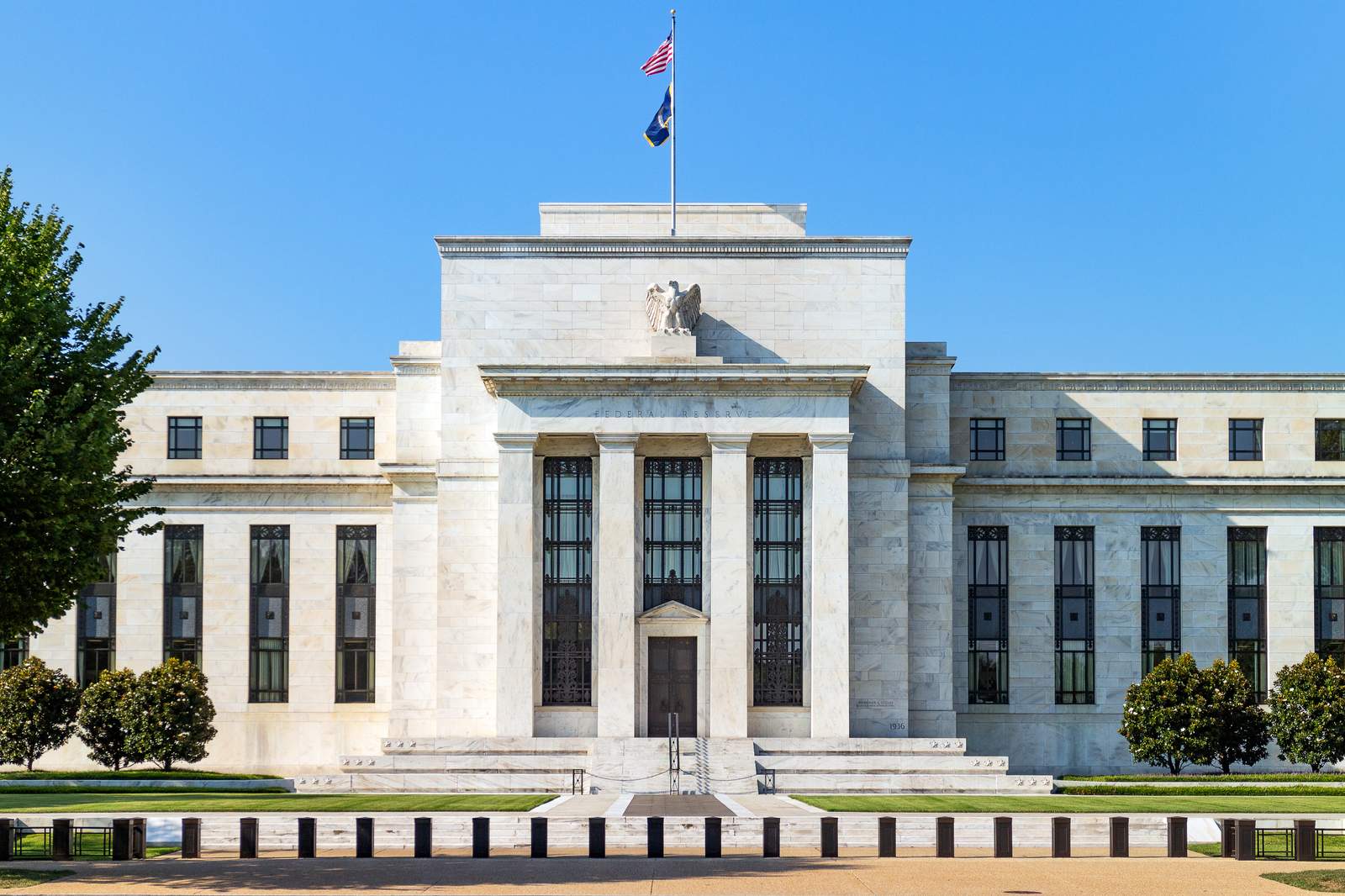
With three rate cuts priced in by futures markets, finance leaders must plan across three distinct scenarios, each with different implications.

An 18% average increase in landed costs for China-heavy manufacturers is forcing a complete rebuild of cost models and hedging strategies.

Services inflation at 4.1% vs. 1.2% for goods signals a structural shift that challenges conventional inflation playbooks.
