The share of payables teams running fully automated AP more than quadrupled in a year, but most of what they automated was data capture. The controls that stop a fraudulent payment, and the payments infrastructure that speeds up cash, have not kept pace.

Key Takeaways
On paper, accounts payable just had its breakout year. The share of finance teams reporting fully automated AP more than quadrupled in twelve months, and use of AI tools and agents tripled. Look one layer down, though, and the automation is mostly about getting invoices into the system faster, not about deciding safely what leaves it. Barely one in five finance professionals is very confident they would stop a fraudulent change to a supplier's bank details before the payment goes out. The faster the pipe, the more that gap matters.
The numbers come from Tipalti's 2026 Global Finance Outlook Index, released October 15. Tipalti, which sells AP and payments automation, ran the survey with Kickstand from August 3 to 24 across 2,116 full-time finance, procurement and AP professionals in the United States, United Kingdom, Canada, Germany and the Netherlands, at organizations with at least 20 employees. Fully automated AP operations rose from 7% in 2025 to 31% in 2026, and use of AI-powered tools or agents climbed from 14% to 46%.
The detail behind the headline is less dramatic. Of the respondents reporting fully automated AP, 66% say that automation mainly involves OCR and invoice digitization. Only 6% run fully automated operations powered by agentic AI. The payoff so far is real but narrow: 48% of adopters report time savings, 33% faster invoice coding or approvals and 30% a faster month-end close. Meanwhile the manual load has not gone away. Finance professionals spend an average of 10 hours a week on manual AP tasks, which Tipalti puts at about 65 working days a year, and 66% say manual work increased over the past year.
That workload has knock-on costs that reach the CFO directly. In the same survey, 30% have experienced delayed monthly closes because of inefficient AP, 30% report resulting compliance or risk issues, and 19% say team members have left their organizations because of inefficient processes. Digitizing the invoice did not, by itself, fix any of those.
The most uncomfortable figure in the report is about fraud. Cyber threats are a growing concern for 73% of respondents and fraud for 63%, yet only 21% are very confident their processes would detect a fraudulent vendor payment change before funds are disbursed. Vendor bank-detail changes are the classic entry point for payment fraud because they ride on a legitimate supplier relationship. If the invoice now flows straight through capture and approval, the master-data change is often the last place a human would have noticed something wrong.
Respondents know where their own doubts sit. The leading barriers to AP automation are data security at 36%, accuracy at 33%, and control and trust in AI at 30%. Rob Israch, president of Tipalti, framed the shift as moving from what technology can automate to "what businesses can confidently entrust it to do." Regulation is adding pressure from the other side: 61% say rising regulatory and compliance complexity has prompted them to reconsider how they manage AP, and only 23% feel very prepared for the financial complexity of international growth. Ambitions are cooling accordingly, with 30% planning to expand into new countries over the next 12 to 24 months, down 14% from 2025.
The payables picture has a mirror image in cash collection. Signal: The B2B Finance Report, published October 22 by payments company Fortis and produced with Avalara and Traild, surveyed 100 senior finance leaders at companies with $1 million to $100 million in revenue, 90% of them in the U.S. Some 72% believe modernizing payments would significantly help with cash flow challenges, but only 21% report having modernized, effective payments infrastructure in place. High days sales outstanding is a top working capital concern for 61%, and 59% point to a lack of real-time cash visibility.
The obstacles are mostly internal. Three in four respondents, 75%, cite difficulty integrating automation with existing systems and tools, and 64% point to organizational inertia or a preference for current processes. Brent Coles, CFO of Fortis, noted that "the delays often start within a company's own financial processes." The report's own illustration shows the stakes: for a business with $50 million in annual credit sales, 10 days of DSO represents roughly $1.37 million in receivables.
Smaller firms feel the squeeze most. Intuit QuickBooks' 2026 small business late payments report found 59% of businesses have invoices overdue by 30 days or more, up from 47% a year earlier, and 39% say a single late payment made it hard to cover payroll or bills in the past year. On the outgoing side, 74% are not fully automated in managing and paying bills. Every one of those businesses is someone else's supplier, which is why slow, manual payables at one company become a cash flow problem at another.

Guide
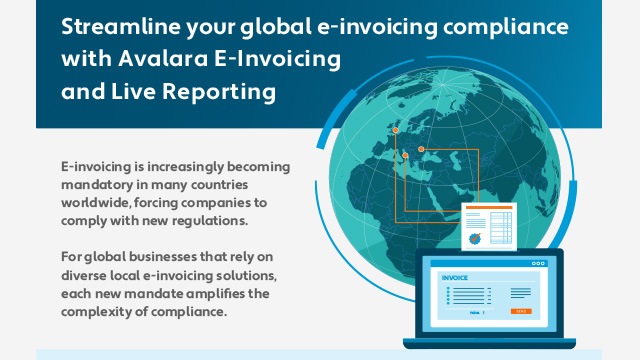
61% of finance teams say rising compliance complexity is forcing them to rethink AP, and only 23% feel ready for international growth. This guide breaks down country-specific e-invoicing and live reporting requirements across the EU, Latin America and Asia-Pacific.
Download

Playbook
72% of mid-market finance leaders say modern payments would ease cash flow, but only 21% have the infrastructure. This playbook lays out how to digitize invoicing and payments and automate credit and collections across order-to-cash.
Download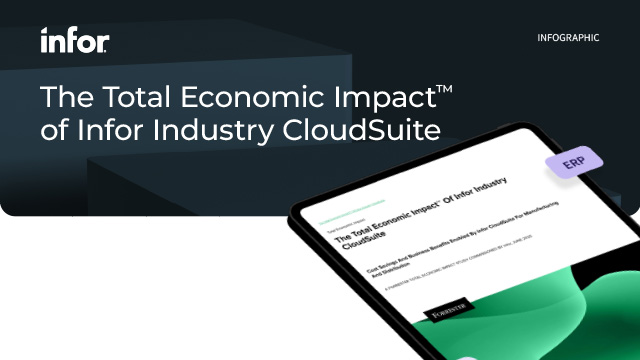

Report
With 30% of teams reporting closes delayed by inefficient AP, the business case has to show more than time saved on invoice entry. This report quantifies returns from a cloud platform in error reduction, close acceleration and total cost of ownership.
Download
Only 7% of 1,505 finance leaders say governance comes before the speed of AI agent deployment.

Hybrid pricing now leads among B2B software companies at 37%, and Intuit has agreed to buy revenue management platform Sequence.

A survey of 270 CFOs finds teams spend 26% of the working week verifying or correcting AI output.
