A new survey of 400 finance, tax and accounting professionals shows confidence running well ahead of execution on e-invoicing and live reporting. Norway and the Philippines both start new rules inside the next ten weeks, and neither accepts a confident spreadsheet as compliance.

Key Takeaways
Ask a finance team whether it is ready for e-invoicing and it will almost always say yes. Ask how much of the process actually runs without a person rekeying, exporting or emailing a PDF, and the answer shrinks by a third. That gap is now the most useful number in tax compliance, because two more countries switch on new e-invoicing rules before most 2027 budgets are signed, and the governments setting them measure readiness by what reaches their systems, not by how teams rate themselves.
Avalara's 2026 State of Finance report, released October 21, is based on a Hanover Research survey of 400 finance, tax and accounting professionals in Australia, Canada, the U.K. and the U.S., fielded in March and April. Forty-two percent work at organizations with more than $50 million in annual revenue and 21% at companies with at least $500 million. Avalara sells e-invoicing compliance software, so the framing is not neutral, but the headline finding cuts against a vendor's easy story: teams already believe they are ready.
Eighty-six percent described themselves as extremely or very prepared for global e-invoicing and live reporting mandates. Only half have fully or mostly automated the process. Another 30% said they comply with mandates only where they are legally required to, which is a reasonable cost decision in a single market and a fragile one for a company selling across borders, since the list keeps growing. The report counts more than 80 countries that now require or have announced e-invoicing and live reporting rules.
The likely explanation for the gap is that many teams count a working manual or semi-manual process as preparedness. Live reporting regimes are designed to remove exactly that slack. When an invoice has to be issued in a structured format, routed through a certified network or cleared by a tax authority in near real time, a process that depends on someone fixing exceptions at month end stops being a process and becomes a backlog.
Norway is the clearest example of a mandate that leaves little room for interpretation. According to KPMG's summary of the final regulations, the Norwegian Tax Administration published amendments to the Bookkeeping Regulations on September 29, 2026. From January 1, 2027, businesses subject to bookkeeping obligations must issue e-invoices for domestic B2B sales where the recipient can receive them, using EHF or Peppol BIS formats at version 3.0 or newer. PDF invoices are not permitted when the buyer can receive an e-invoice.
The rules reach further than many foreign sellers will expect. They cover foreign businesses subject to Norwegian bookkeeping obligations, including those registered for VAT in Norway without a permanent establishment. From January 1, 2028, the buyer's organization number must appear on sales documents. From January 1, 2030, every entity with bookkeeping obligations must be able to receive e-invoices and keep its books in an electronic accounting system, and the transitional allowance for other structured formats such as EDIFACT ends. The main small-business exemption applies to annual turnover of NOK 50,000 or less, and even that falls away for a business already using an invoicing system capable of issuing e-invoices.
The Philippines deadline arrives a day earlier and with less settled detail. Writing in The Philippine Star on October 27, Treb Jersey Basco of R.G. Manabat & Co. (KPMG in the Philippines) explains that under RMC 98-2026, covered taxpayers must issue electronic invoices by December 31, 2026. Coverage includes taxpayers engaged in e-commerce, those under the Large Taxpayers Service, large taxpayers under the Ease of Paying Taxes Act and taxpayers using computerized accounting systems or invoicing software. Micro taxpayers are not covered.
An invoice only counts if it is generated in a structured format by registered or accredited software, issued to the customer digitally, and its data can be extracted and transmitted to the Bureau of Internal Revenue. A Permit to Issue Electronic Invoice is required, but Basco notes that no issuance on its requirements had been published as of writing. Certification under the BIR's Electronic Invoicing System must follow within six months of the permit, or the permit may be revoked. A company that is confident but not automated has roughly nine weeks to close that gap against rules still being finalized.
The same survey shows where the money is heading instead. Every respondent reported using at least one AI solution in their work, up from 84% in 2025 and 47% in 2024. AI is embedded directly into finance and ERP systems at 43% of organizations, and half of teams use commercial AI models. More than half, 53%, are making agentic AI their top technology investment, ahead of cybersecurity (49%), data analytics (49%), cloud computing (42%) and ERP systems (41%). Only 29% of finance and tax teams currently use agentic AI solutions.
Spending is set to keep climbing: 42% expect to spend significantly more on AI technologies through spring 2027 and another 55% slightly more. There is no contradiction between that and the e-invoicing gap, but there is a sequencing risk. An agent that reconciles, classifies or chases invoices is only as reliable as the structured data underneath it, and structured invoice data is precisely what e-invoicing mandates force into existence. Teams that automate issuance and receipt first give their AI something clean to work on. Teams that buy the agent first will be pointing it at PDFs that Norway, from January, will no longer accept.

Playbook
When 86% feel prepared but only half have automated, the first job is finding where the manual gaps actually sit. This playbook gives CFOs a framework to identify compliance gaps, quantify the exposure and build a program that holds up as mandates like Norway's take effect.
Download

Guide
AI already sits inside finance and ERP systems at 43% of organizations, and structured invoicing starts in the same core system. This guide covers how to evaluate cloud ERP with AI enablement as a primary criterion and structure a migration that delivers value from day one.
Download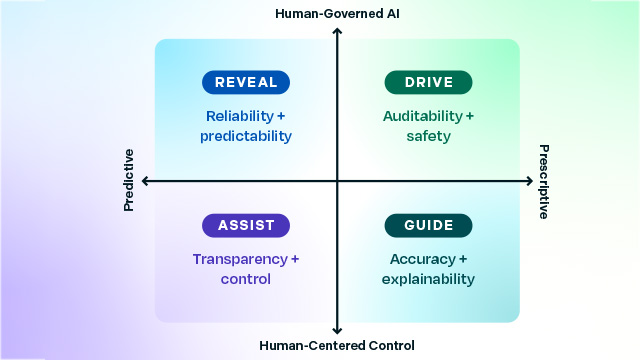

Guide
53% of organizations call agentic AI their top technology investment, yet only 29% of finance and tax teams use it today. This plain-language guide explains what agents actually do in AR workflows, credit decisions and cash application, and what they need to work well.
Download
A $2 billion base expansion starts January 1, and the draft rules decide which renewals get taxed.

Fewer restatements, but one cost error has already cost a CFO and a board overhaul.

Greece made e-invoicing universal while most UAE finance teams still run ERPs that cannot comply.
