AI now shapes the forecasts, tax provisions and valuations that external auditors test. BDO's new survey finds half of finance leaders cannot yet document every AI-assisted output, and the evidence trail is becoming the real compliance question.

Key Takeaways
For most of the past two years, the AI conversation in finance has been about adoption: who is using it, where, and how fast. That phase is over. AI is now inside the numbers that go to the auditor, from cash forecasts to deferred tax to impairment tests. The question auditors, audit committees and regulators will ask next is simpler and harder: when a model shaped an estimate, can the company show how, on what data, and who checked it?
BDO's third annual Audit Innovation Survey, released November 4, polled 200 senior finance leaders at U.S. public and private companies with revenue between $250 million and $10 billion, all of which undergo an annual external audit. The fieldwork ran from August 6 to 28 and was conducted by Rabin Roberts Research. The headline is stark: 99% say their organization uses AI to generate or inform at least one financial estimate or judgment that the external auditor reviews.
The list of uses reads like the riskiest pages of a set of financial statements. 62% use AI for cash flow or earnings forecasts, 55% for tax provisions or deferred tax calculations, 54% for fair value measurements or asset valuations and 50% for credit loss allowances. Liability estimates (47%), revenue recognition judgments (46%) and impairment assessments (42%) follow close behind. These are exactly the areas where auditors already spend the most time, because they depend on assumptions rather than transactions. Agentic AI is close behind: 47% of respondents are piloting or deploying it, and another 46% are actively evaluating it for finance.
"The conversation has shifted from 'What technology are you using?' to 'Can I trust the outcome?'" said Demetrios Frangiskatos, BDO's Assurance National Managing Principal.
Trust is where the numbers thin out. Only 49% of finance leaders say they have the documentation and processes needed to explain and substantiate all AI-assisted outputs. Another 46% can explain most outputs but acknowledge gaps. Data governance is split the same way: 49% rate their finance department's data governance as managed or optimized, 29% have formal policies but still rely on some manual reconciliation, and roughly one in five describe their practices as developing or ad hoc. 17% concede that their AI ambitions are moving faster than the data infrastructure and governance underneath them.
The gap is not new, but it has become more consequential. A year ago, BDO's 2025 survey, as reported by CPA Practice Advisor, found that 92% of finance leaders had implemented AI or planned to within 12 months, while only 43% had a formal AI governance framework. At that point most AI use sat in data management, risk detection and data entry. Twelve months later, the same tools are informing tax provisions and valuations. Governance that was optional for a data-entry tool is not optional for a number that ends up in a footnote disclosure.
Finance leaders are aware of the tension. 86% worry that overreliance on AI could reduce human judgment in the audit, even as 65% expect their auditors' own AI use to make audits more rigorous. And only 6% say their organization is ready for continuous auditing today. The prerequisites they name are revealing: better internal data infrastructure (71%), stronger AI governance (63%), clearer regulatory guidance (62%), greater auditor capability (57%) and lower cost (48%). 55% say they have a defined finance and accounting AI roadmap with formal investment commitments and milestones.
Closing the documentation gap takes people, controls and review time, and new research suggests most companies have not budgeted for it. Capgemini Research Institute, which surveyed 500 senior executives at organizations with more than $1 billion in revenue in September, reported on November 12 that only a third can confidently estimate indirect AI costs such as oversight, rework and governance. Half say AI spending is approved without adequate visibility into its full cost, and 59% say AI spending over the past 12 months was significantly higher than expected or budgeted.
Put the two studies side by side and the risk becomes clear. The review work that makes an AI-informed estimate auditable is the same indirect cost most companies cannot yet size. When that work is not funded, it tends to be skipped, and the gap surfaces later as audit questions, extended fieldwork or a control deficiency. "Organizations need to measure cost, quality and business value together," said Volker Darius, CEO of Capgemini Invent. For an estimate the auditor will test, quality includes being able to show the work.

Playbook
More than half of finance teams now use AI on tax provisions, one of the judgments auditors probe hardest. This playbook helps CFOs find compliance gaps, size the exposure and build a tax program that holds up under scrutiny.
Download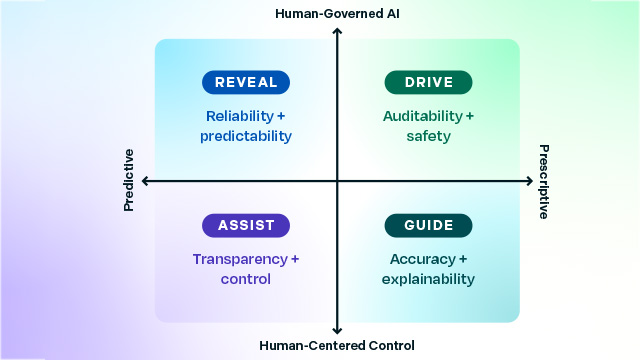

Guide
With 47% of finance teams piloting agentic AI and half using AI on credit loss allowances, knowing what an agent actually decides in AR and credit is the first step to documenting it. This guide explains it in plain language.
Download

Guide
Cash flow forecasting and revenue recognition are two of the most common AI-assisted judgments in BDO's survey. This guide shows SaaS CFOs where AI fits in both, so they can decide where the evidence trail needs to be strongest.
Download
The new filing system checks every return before it accepts it.

Confidence in e-invoicing readiness is running well ahead of actual automation.

Fewer restatements, but a single error can still cost millions.
